
 Faire un don


- Service
- Oncologie médicale
Signaler une erreur sur cette page
Contacter le service
Oncologie médicale
Accueil et Secrétariat oncologie médicale : 03 81 47 99 99
Actualités
-
Recherche
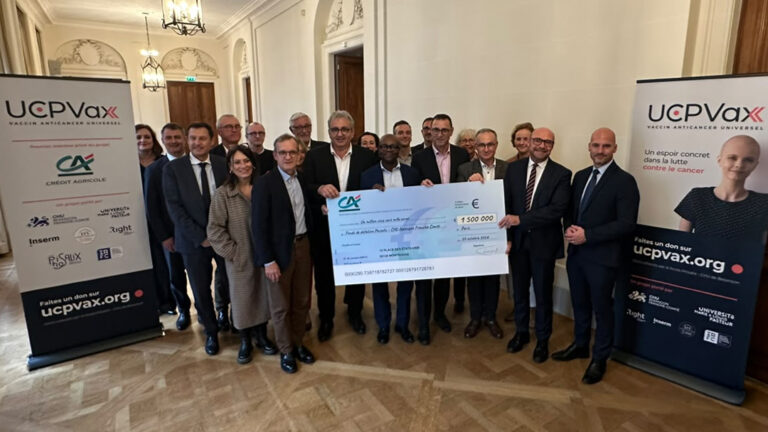
UCPVax : un espoir concret dans la lutte contre le cancer
Né de la recherche publique à Besançon, UCPVax est un vaccin thérapeutique anticancer universel. Après plus de quinze ans de recherche et… -
Recherche
Le CIC fête 20 ans !
Créé en 2005, le Centre d’investigation clinique de Besançon (Inserm CIC 1431) célèbrait hier soir ses 20 ans. Labellisé par l’Inserm et le… -
Recherche
Podcast
Un podcast pour mieux comprendre la recherche contre les cancers Le podcast réalisé par l'Institut national du cancer (INCa) « Parlons recherche…

Contributions aux publications scientifiques du CHU Besançon Franche-Comté
Circulating Transcriptome Analysis Finds Gene Signatures and Immune Cell Activation and Abundance Predict Response to Immunotherapy in Bladder Cancer.
Article originalClinical cancer research : an official journal of the American Association for Cancer Research2026-Apr
Auteur CHU : Adotévi Olivier
Immune checkpoint blockers (ICB) have revolutionized oncology by achieving durable tumor responses in advanced cancers. Nevertheless, currently approved biomarkers (PD-L1, microsatellite instability, and tumor mutational burden) have suboptimal positive and negative predictive values for tumor response and survival. We aimed to assess the value of RNA sequencing from whole blood to predict respons
Contribution of a specific panel by flow cytometry for the differential diagnosis of plasmacytoid dendritic cell neoplasms.
Article originalAnnals of hematology2026-Feb
Auteurs CHU : Renosi Florian, Roussel Xavier, Fournet Thomas, Roggy Anne, Pourchet Valentin, Deconinck Eric, Daguindau Etienne, Adotévi Olivier, Garnache-Ottou Francine
Interest of adjuvant and neoadjuvant vaccination in the early stages of cancer.
Revue de la littératureCritical reviews in oncology/hematology2026-Jun
Auteurs CHU : Clairet Anne-Laure, Eberst Guillaume, Adotévi Olivier
Therapeutic cancer vaccines aim to expand tumor-antigen-specific T lymphocytes to eliminate cancer cells selectively. Recent advances in identifying neoantigens arising from genomic mutations in tumor cells, along with progress in vaccine-platform engineering, particularly in messenger RNA technologies, have revitalized the clinical development of cancer vaccines. Promising data from clinical tria
Pivekimab sunirine in blastic plasmacytoid dendritic cell neoplasm : assessing spatial response and unraveling resistance mechanisms.
Article originalHaematologica2026-Oct
Auteurs CHU : Roussel Xavier, Renosi Florian, Monnien Franck, Boichut Cecile, Adotevi Olivier, Garnache-Ottou Francine
Targeting SALL4 with an HLA Class I-Restricted TCR for Cancer Immunotherapy.
Article originalCancer immunology research2026-Jan
Auteurs CHU : Asgarov Kamal, Vienot Angélique, Binda Delphine, Adotévi Olivier, Kroemer Marie, Borg Christophe
Aberrant expression of the oncogene SALL4 is associated with stemness, a more aggressive cancer phenotype, and reduced patient survival in various tumor types, making SALL4 a potential target for cancer immunotherapy. We conducted a transcriptional analysis of SALL4 expression in colorectal cancer tissues and demonstrated that SALL4 was overexpressed in primary tumors and paired liver metastases.
Voir les 31 autres publications
Beneficial effect of resveratrol on T cell oxidative metabolism and anti-tumor function is conditioned by prior T cell history.
Article originalMolecular therapy. Methods & clinical development2025-Sep
Auteurs CHU : Royer Bernard, Adotévi Olivier
Despite the clinical success of redirected T cells in the setting of cancer adoptive cell immunotherapy, patients may exhibit resistance to treatment, resulting in uncontrolled disease and relapses. This phenomenon partly relies on impaired -produced T cell metabolic fitness, including a decreased respiratory reserve, as well as a greater sensitivity to tumor-mediated metabolic stress. To improve
Characterization of the aryl hydrocarbon receptor as a potential candidate to improve cancer T cell therapies.
Article originalCancer immunology, immunotherapy : CII2025-May
Auteurs CHU : Garnache-Ottou Francine, Adotévi Olivier
The efficacy of T-cell-based cancer therapies can be limited by the tumor microenvironment which can lead to T cell dysfunction. Multiple studies, particularly in murine models, have demonstrated the capacity of the aryl hydrocarbon receptor (AHR) to negatively regulate antitumor T cell functions. AHR is a cytoplasmic receptor and transcription factor that was originally identified as a xenobiotic
Deciphering human endogenous retrovirus expression in colorectal cancers : exploratory analysis regarding prognostic value in liver metastases.
Article originalEBioMedicine2025-Jun
Auteurs CHU : Viot Julien, Monnien Franck, Selmani Zohair, Adotevi Olivier, Vienot Angélique, Vernerey Dewi, Borg Christophe
Human Endogenous RetroVirus (HERV) expression in tumours reflects epigenetic dysregulation of cancer and an oncogenic factor through promoter/enhancer action on genes. While more than 50% of colorectal cancers develop liver metastases, HERV has not been studied in this context. We collected 400 RNA-seq samples from over 200 patients with primary and liver metastases, including public data and a no
Efficacy of everolimus in patients with hormone receptor positive, HER2 negative, metastatic breast cancer pretreated with CDK4/6 inhibitors.
Article originalBreast cancer research : BCR2025-Dec
Auteurs CHU : Pereira Victor, Boisson Cyril, Adotévi Olivier, Curtit Elsa
Everolimus was approved in 2012 for the treatment of advanced hormone-receptor-positive, HER2-negative metastatic breast cancer (MBC) in combination with exemestane. Since then, the first line treatment for these cancers has evolved with the development of CDK4/6 inhibitors. Patients with histologically proved MBC and who received everolimus between 2012 and 2022 were included in a multicentric re
Gut microbiota : a new factor modulating the immunizing potential of viral and cancer vaccines.
Article originalResearch square2025-Oct
Auteurs CHU : Hocquet Didier, Adotevi Olivier
Vaccines represent a major public health intervention against infectious diseases and potentially cancer. Surrogate markers of vaccine efficacy usually rely on neutralizing antibody titers afflicted by high interindividual variabilities. Automated multiplexed T cell assays currently allow to test the clinical relevance of T lymphocyte responses during vaccine rollout. We examined cellular and/or h
New leads to enhance tagraxofusp efficacy in pDC-AML.
Article originalBlood neoplasia2025-May
Auteurs CHU : Roussel Xavier, Renosi Florian, Adotevi Olivier, Garnache-Ottou Francine
TIE-2-Expressing Monocytic Myeloid-Derived Suppressor Cells Are Involved in Resistance to Anti-PD-1 Therapy Mediated by Angiopoietin 2 in Patients with Melanoma.
Article originalThe Journal of investigative dermatology2025-Oct
Auteurs CHU : Wespiser Mylène, Pereira Victor, Aubin François, Adotevi Olivier, Nardin Charlée
UCPVax, a CD4 helper peptide vaccine, induces polyfunctional Th1 cells, antibody response, and epitope spreading to improve antitumor immunity.
Article originalCell reports. Medicine2025-Jul
Auteurs CHU : Jacquin Marion, Meurisse Aurélia, Vernerey Dewi, Borg Christophe, Adotévi Olivier
The induction of an antitumor CD4 T helper response is essential for the efficacy of therapeutic cancer vaccines. However, few vaccines are specifically designed to target CD4 T cells in human cancers. Here, we characterize the immune mechanisms of UCPVax, a helper peptide vaccine derived from telomerase. Ex vivo immune profiling of peripheral blood from 60 patients with advanced lung cancer revea
Venetoclax in the Therapeutic Strategy for BPDCN Management.
Article originalEJHaem2025-Aug
Auteurs CHU : Kroemer Marie, Bonnot-Perrin Sophie, Adotévi Olivier
Venetoclax, a B-cell lymphoma 2 (BCL-2) inhibitor, is a promising treatment for blastic plasmacytoid dendritic cell neoplasm (BPDCN) and is currently under evaluation in clinical trials. However, several case reports have reported relapses after prolonged treatment, and development of resistance. To date, no study has investigated resistance to venetoclax in BPDCN. Therefore, we sought to investig
Characterization of atypical T cells generated during expansion process for T cell-based adoptive immunotherapy.
Article originalFrontiers in immunology2024
Auteur CHU : Adotévi Olivier
Engineered T cell-based adoptive immunotherapies met promising success for the treatment of hematological malignancies. Nevertheless, major hurdles remain to be overcome regarding the management of relapses and the translation to solid tumor settings. Properties of T cell-based final product should be appropriately controlled to fine-tune the analysis of clinical trial results, to draw relevant co
Enzyme-linked ImmunoSpot (ELISpot) assay to quantify peptide-specific IFN-γ production by splenocytes in a mouse tumor model after radiation therapy.
Article originalMethods in cell biology2024
Auteurs CHU : Adotévi Olivier, Boustani Jihane
To develop new effective therapeutic strategies for cancer patients, there is a need for extensive and precise insights into the mechanisms involved in the immune response to anti-cancer treatments. The enzyme-linked immunospot (ELISpot) assay is a rapid and reproducible technique that allows the detection of cytokine-producing antigen-specific T cells at the single cell level. This protocol descr
Targeting two radiation-induced immunosuppressive pathways to improve the efficacy of normofractionated radiation therapy in a preclinical colorectal cancer model.
Article originalInternational journal of radiation biology2024
Auteurs CHU : Boustani Jihane, Adotévi Olivier
We have previously demonstrated in a murine colorectal cancer model that normofractionated RT (normoRT: 18 × 2 Gy) induced MDSC infiltration and PD-L1 expression, while hypofractionated RT (hypoRT: 3 × 8 Gy) induced Treg. Here, we wanted to assess whether the association of normoRT with treatments that target two radiation-induced immunosuppressive pathways (MDSC and PD-L1) could improve tumor con
Chemotherapy to potentiate the radiation-induced immune response.
Revue de la littératureInternational review of cell and molecular biology2023
Auteurs CHU : Wespiser Mylène, Boustani Jihane, Adotévi Olivier
Chemoradiation (CRT) is a conventional therapy used in local cancers, especially when they are locally advanced. Studies have shown that CRT induces strong anti-tumor responses involving several immune effects in pre-clinical models and humans. In this review, we have described the various immune effects involved in CRT efficacy. Indeed, effects such as immunological cell death, activation and mat
Durable response of lung carcinoma patients to EGFR tyrosine kinase inhibitors is determined by germline polymorphisms in some immune-related genes.
LettreMolecular cancer2023-Jul
Auteurs CHU : Westeel Virginie, Kim Stefano, Adotevi Olivier
Non-small cell lung cancer is a very poor prognosis disease. Molecular analyses have highlighted several genetic alterations which may be targeted by specific therapies. In clinical practice, progression-free survival on EGFR TKI treatment is between 12 and 14 months. However, some patients progress rapidly in less than 6 months, while others remain free of progression for 16 months or even longer
Evaluation of the interest to combine a CD4 Th1-inducer cancer vaccine derived from telomerase and atezolizumab plus bevacizumab in unresectable hepatocellular carcinoma : a randomized non-comparative phase II study (TERTIO – PRODIGE 82).
Article originalBMC cancer2023-Jul
Auteurs CHU : Vienot Angélique, Jacquin Marion, Rebucci-Peixoto Magali, Pureur Dimitri, Stouvenot Morgane, Di Martino Vincent, Muller Allison, Clairet Anne-Laure, Fagnoni-Legat Christine, Adotevi Olivier, Meurisse Aurélia, Vernerey Dewi, Borg Christophe
Several cancer immunotherapies that target the PD-L1/PD-1 pathway show promising clinical activity in patients with hepatocellular carcinoma (HCC). However, the standard of care in first-line treatment with atezolizumab (anti-PD-L1 therapy) in combination with bevacizumab is associated with a limited objective response rate. Telomerase reverse transcriptase (TERT) activation meets the criteria of
Interplay between plasmacytoid dendritic cells and tumor-specific T cells in peripheral blood influences long-term survival in non-small cell lung carcinoma.
Article originalCancer immunology, immunotherapy : CII2023-Mar
Auteur CHU : Adotevi Olivier
Plasmacytoid dendritic cells (pDCs) represent a subset of antigen-presenting cells that play an ambivalent role in cancer immunity. Here, we investigated the clinical significance of circulating pDCs and their interaction with tumor-specific T cell responses in patients with non-small cell lung cancer (NSCLC, n = 126) . The relation between intratumoral pDC signature and immune checkpoint inhibito
Predictive biomarkers and specific immune responses of COVID-19 mRNA vaccine in patients with cancer : prospective results from the CACOV-VAC trial.
Article originalBMJ oncology2023
Auteurs CHU : Spehner Laurie, Orillard Emeline, Falcoz Antoine, Lepiller Quentin, Almotlak Hamadi, Kim Stefano, Curtit Elsa, Meynard Guillaume, Nardin Charlee, Chartral Ugo, Lopez Morgane, Vernerey Dewi, Adotevi Olivier, Borg Christophe, Mansi Laura
Vaccinated patients with cancer in follow-up studies showed a high seropositivity rate but impaired antibody titres and T cell responses following mRNA vaccine against COVID-19. Besides clinical characteristics and the type of anticancer treatment before vaccination, the identification of patients susceptible to non-response following vaccination using immunological markers is worth to be investig
Response to Chemoimmunotherapy Is Associated With Expansion of Systemic Antitumor CD4 + Th1 Response in Metastatic Non-Small Cell Lung Cancer.
Article originalJournal of immunotherapy (Hagerstown, Md. : 1997)2023-Sep
Auteurs CHU : Wespiser Mylène, Adotévi Olivier
Limited data have reported the evolution of antitumor immune responses under chemoimmunotherapy (chemo-IO) in patients with metastatic non-small cell lung cancer. In this concise study, we performed dynamic monitoring of antitumor CD4 + T helper 1 (Th1) response in peripheral blood from 12 patients receiving a first-line chemo-IO. Tumor-reactive CD4 + Th1 cells were assessed within blood lymphocyt
Safety, Immunogenicity, and 1-Year Efficacy of Universal Cancer Peptide-Based Vaccine in Patients With Refractory Advanced Non-Small-Cell Lung Cancer : A Phase Ib/Phase IIa De-Escalation Study.
Article originalJournal of clinical oncology : official journal of the American Society of Clinical Oncology2023-Jan
Auteurs CHU : Adotévi Olivier, Vernerey Dewi, Jacoulet Pascale, Meurisse Aurélia, Almotlak Hamadi, Jacquin Marion, Kaulek Vincent, Boullerot Laura, Orillard Emeline, Eberst Guillaume, Gainet-Brun Marie, Clairet Anne-Laure, Guillaume Yves, Kroemer Marie, Hocquet Didier, Moltenis Mélanie, Limat Samuel, Fagnoni-Legat Christine, Borg Christophe, Westeel Virginie
Universal cancer peptide-based vaccine (UCPVax) is a therapeutic vaccine composed of two highly selected helper peptides to induce CD4+ T helper-1 response directed against telomerase. This phase Ib/IIa trial was designed to test the safety, immunogenicity, and efficacy of a three-dose schedule in patients with metastatic non-small-cell lung cancer (NSCLC). Patients with refractory NSCLC were assi
Use of cancer vaccine after immunotherapy failure : a promising strategy for advanced NSCLC patients with secondary resistance to checkpoint inhibitors.
ÉditorialAnnals of oncology : official journal of the European Society for Medical Oncology2023-Oct
Auteur CHU : Adotévi O
A Phase II Study Evaluating the Interest to Combine UCPVax, a Telomerase CD4 T1-Inducer Cancer Vaccine, and Atezolizumab for the Treatment of HPV Positive Cancers : VolATIL Study.
Article originalFrontiers in oncology2022
Auteurs CHU : Rebucci-Peixoto Magali, Vienot Angélique, Adotevi Olivier, Jacquin Marion, Maurina Tristan, Kalbacher Elsa, Bazan Fernando, Meynard Guillaume, Clairet Anne-Laure, Fagnoni-Legat Christine, Vernerey Dewi, Meurisse Aurélia, Kim Stefano, Borg Christophe, Mansi Laura
There is a strong rational of using anti-programmed cell death protein-1 and its ligand (anti-PD-1/L1) antibodies in human papillomavirus (HPV)-induced cancers. However, anti-PD-1/L1 as monotherapy induces a limited number of objective responses. The development of novel combinations in order to improve the clinical efficacy of an anti-PD-1/L1 is therefore of interest. Combining anti-PD-1/L1 thera
Antitumor CAR T-cell Screening Platform : Many Are Called, but Few Are Chosen.
ÉditorialCancer research2022-Jul
Auteur CHU : Adotévi Olivier
Treatment with T cells expressing chimeric antigen receptors (CAR) is a promising anticancer therapy. However, this approach has several limitations and has not yet been effectively applied to treat solid tumors. The study by Panowski and colleagues represents the first comparative analysis of multiple single chain fragment variable (scFv)-based anti-CD70 CAR T-cell clones for the development of a
Harnessing Antitumor CD4 T Cells for Cancer Immunotherapy.
Revue de la littératureCancers2022-Jan
Auteurs CHU : Abdeljaoued Syrine, Borg Christophe, Adotévi Olivier
Over the past decades, CD4 T cells have been considered as a supporting actor in the fields of cancer immunotherapy. Until recently, accumulating evidence has demonstrated the critical role of CD4 T cells during antitumor immunity. CD4 T cells can either suppress or promote the antitumor cytotoxic CD8 T cell responses, either in secondary lymphoid organs or in the tumor. In this review, we provide
Homeostatic cytokines tune naivety and stemness of cord blood-derived transgenic T cells.
Article originalCancer gene therapy2022-Jul
Auteurs CHU : Adotévi Olivier, Borg Christophe
Engineered T-cell therapies have proven to be successful in cancer and their clinical effectiveness is directly correlated with the infused T-cell differentiation profile. Indeed, stem cell memory and central memory T cells proliferate and persist longer in vivo compared with more-differentiated T cells, while conferring enhanced antitumor activity. Here, we propose an optimized process using cord
Naturally Occurring Telomerase-Specific CD4 T-Cell Immunity in Melanoma.
Article originalThe Journal of investigative dermatology2022-Feb
Auteurs CHU : Nardin Charlée, Puzenat Eve, Aubin François, Adotevi Olivier
CD4 T cells play a key role in anticancer immunity. In this study, we investigate the clinical relevance of circulating CD4 T helper type 1 (Th1) response against telomerase (anti-TERT Th1 response) in patients with melanoma. The spontaneous anti-TERT Th1 response was detected in 54.5% (85/156) of patients with melanoma before treatment. The prevalence of this systemic response was inversely relat
Plasma CD27, a Surrogate of the Intratumoral CD27-CD70 Interaction, Correlates with Immunotherapy Resistance in Renal Cell Carcinoma.
Article originalClinical cancer research : an official journal of the American Association for Cancer Research2022-Nov
Auteur CHU : Adotevi Olivier
CD70 is a costimulatory molecule known to activate CD27-expressing T cells. CD27-CD70 interaction leads to the release of soluble CD27 (sCD27). Clear-cell renal cell carcinoma (ccRCC) expresses the highest levels of CD70 among all solid tumors; however, the clinical consequences of CD70 expression remain unclear. Tumor tissue from 25 patients with ccRCC was assessed for the expression of CD27 and
Prognostic value of CD4+ T lymphopenia in non-small cell lung Cancer.
Article originalBMC cancer2022-May
Auteurs CHU : Eberst Guillaume, Vernerey Dewi, Meurisse Aurélia, Almotlak Hamadi, Adotevi Olivier, Westeel Virginie
There is a paucity of data regarding the prognostic influence of peripheral blood CD4+ T lymphopenia in non-small cell lung cancer (NSCLC). Therefore, we investigated the prognostic value of T lymphopenia in NSCLC. Treatment-naive patients with a pathological diagnosis of NSCLC, at clinical stage I to IV were included in the prospective TELOCAP1 study. Lymphocytes count was evaluated in peripheral
The Quality of Anti-SARS-CoV-2 T Cell Responses Predicts the Neutralizing Antibody Titer in Convalescent Plasma Donors.
Article originalFrontiers in public health2022
Auteurs CHU : Kroemer Marie, Spehner Laurie, Adotévi Olivier
Convalescent plasma therapy has been described as an attractive approach to treat critically ill patients with COVID-19 (Coronavirus disease 2019). The selection of convalescent plasma donors (CPD) is commonly based on neutralizing antibody titer. A better understanding of the quality of immune responses following COVID-19 will enable the optimization of convalescent donors' selection in convalesc
TIE-2 Signaling Activation by Angiopoietin 2 On Myeloid-Derived Suppressor Cells Promotes Melanoma-Specific T-cell Inhibition.
Article originalFrontiers in immunology2022
Auteurs CHU : Nardin Charlée, Aubin François, Adotevi Olivier
Myeloid-derived suppressor cells (MDSCs) are a heterogeneous group of immune suppressive cells detected in several human cancers. In this study, we investigated the features and immune suppressive function of a novel subset of monocytic MDSC overexpressing TIE-2 (TIE-2 M-MDSC), the receptor for the pro-angiogenic factor angiopoietin 2 (ANGPT2). We showed that patients with melanoma exhibited a hig
Umbilical Cord Blood as a Source of Less Differentiated T Cells to Produce CD123 CAR-T Cells.
Article originalCancers2022-Jun
Auteur CHU : Adotevi Olivier
Chimeric Antigen Receptor (CAR) therapy has led to great successes in patients with leukemia and lymphoma. Umbilical Cord Blood (UCB), stored in UCB banks, is an attractive source of T cells for CAR-T production. We used a third generation CD123 CAR-T (CD28/4-1BB), which was previously developed using an adult's Peripheral Blood (PB), to test the ability of obtaining CD123 CAR-T from fresh or cryo
Pro-Resolving Factor Administration Limits Cancer Progression by Enhancing Immune Response Against Cancer Cells.
Article originalFrontiers in immunology2021
Auteur CHU : Adotévi Olivier
Cancers are consequences of cellular dysfunction leading to an aberrant cellular multiplication and proliferation, subsequently yielding metastasis formation. Inflammatory reaction, with immune cell recruitment, is the main defense against precancerous lesions. However, an inflammatory environment also favors cancer cell progression, with cancer cell evasion from immune surveillance, leading to ca